One commerce platform across web, mobile, and store
Nexlantic builds commerce platforms where the storefront, mobile app, and point of sale share one catalogue, one inventory position, and one customer record, with recommendations that learn from all three.
- React
- Python
- TensorFlow
- AWS
How we approach omnichannel commerce
Retailers lose sales in the gaps between channels: an item shown in stock online that sold out in store an hour ago, a loyalty balance the app cannot see, a return that the website cannot process because the order was placed at a till. An omnichannel platform closes those gaps by treating every channel as a client of the same order, inventory, and customer services.
We build the storefront and store-associate tools in React, the order, catalogue, and inventory services in Python, and the recommendation models in TensorFlow, trained on browsing, purchase, and in-store data together. AWS provides the hosting, search, and event infrastructure. Inventory updates from the warehouse, the till, and the website are reconciled in near real time, so the stock figure a customer sees is the one the store is working from.
Modules this kind of system usually needs
Headless storefront
A fast React storefront with search, faceted navigation, and checkout, served from the same APIs as the mobile app.
Unified inventory
One stock position per SKU per location, updated from warehouse, store, and online events, with reservations at checkout.
Order management
Orders from any channel routed to the best fulfilment option: ship from warehouse, ship from store, click and collect, or in-store pickup.
Recommendations and search
TensorFlow models for product recommendations and ranking, retrained on combined online and in-store behaviour.
Customer profiles and loyalty
A single customer record with purchase history, preferences, and loyalty balances available at the till, in the app, and online.
Store associate tools
Endless-aisle ordering, returns from any channel, and stock lookups on tablets for staff on the shop floor.
How it is typically built
The structural decisions that keep the platform secure, observable and ready to grow.
- React storefront and associate apps consuming the same GraphQL and REST APIs as the mobile app
- Python services for catalogue, pricing, inventory, orders, and promotions, each owning its data and publishing domain events
- Event streaming on AWS for inventory movements, order state changes, and customer activity, with consumers for search and analytics
- TensorFlow recommendation models served through a low-latency inference endpoint and retrained on a schedule
- OpenSearch-backed product search with synonyms, merchandising rules, and personalised ranking
- Payment, tax, and shipping provider integrations behind adapters so providers can change without touching checkout
What goes into this build
Web Development
Custom web applications built with React, Next.js, and modern frameworks. Scalable, secure, and optimized for performance.
Learn moreAI Solutions
Machine learning models, natural language processing, computer vision, and intelligent automation for your products.
Learn moreMobile Apps
Native iOS and Android apps plus cross-platform solutions with React Native and Flutter for maximum reach.
Learn moreCloud Solutions
Cloud architecture, migration, and DevOps on AWS, Azure, and GCP. Infrastructure that scales with your business.
Learn more
Related work

ERP and operations platforms
Finance, inventory, purchasing and HR modules on one data model, with integrations to the systems you keep.
- .NET
- React
- PostgreSQL
- Azure
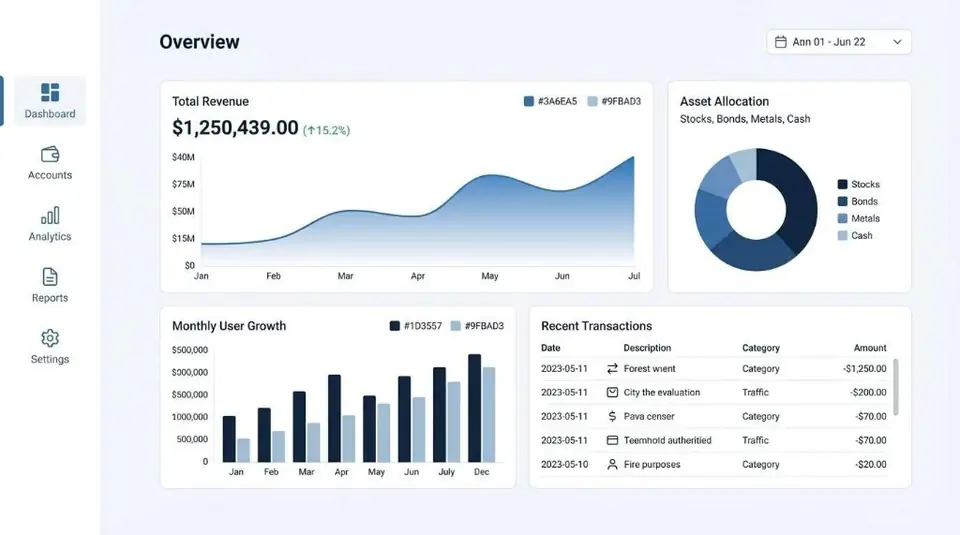
Financial analytics dashboards
Real-time reporting over high-volume transaction data, built for auditability and uptime.
- Next.js
- Python
- MongoDB
- Azure
Omnichannel commerce: common questions
Usually. Most point-of-sale systems can publish sales and returns through an API or export, and we build adapters that feed those events into the shared inventory and customer services. Where a POS cannot integrate, we can supply a web-based till that runs on the same platform.
On your own data: browsing sessions, carts, purchases, returns, and in-store transactions linked to a customer where consent allows. Models start with simple collaborative filtering and are retrained on a schedule as data grows. Everything is evaluated against a holdout set before it reaches customers.
No. Many retailers keep their existing storefront or marketplace listings and start by adding the shared inventory and order services behind them. The storefront, app, and associate tools can then move onto the platform one at a time, each switching over when it is ready.
Have a similar system in mind?
Share your requirements and we will outline an architecture, a team and a timeline.