Patient management platforms for multi-site care
Nexlantic builds scheduling, records, and telehealth systems that give every clinic in a provider network one view of the patient, designed from the start for HIPAA compliance.
- React
- Node.js
- PostgreSQL
- AWS
How we approach patient management platforms
A patient management platform is the operational core of a provider network: appointment scheduling across locations and clinicians, patient demographics and clinical records, intake forms, billing hand-offs, and secure messaging. When these pieces live in separate tools, front-desk staff re-key data, patients repeat themselves, and reporting across sites becomes guesswork. We build them as one system with a single patient identity.
Our builds pair a React front end for staff and patient portals with Node.js services and PostgreSQL, hosted on AWS inside a HIPAA-eligible architecture. Telehealth video, e-prescribing hooks, and EHR integration over HL7 FHIR are added as modules, so a practice can start with scheduling and records and switch on virtual visits later without a migration. Every access to protected health information is logged and reviewable.
Modules this kind of system usually needs
Multi-site scheduling
Provider calendars, room and equipment availability, waitlists, and automated reminders by SMS and email across every location.
Patient records and intake
Demographics, visit history, allergies, documents, and digital intake forms that patients complete before they arrive.
Telehealth visits
Browser-based video consultations with virtual waiting rooms, screen sharing, and visit notes written back to the record.
Patient portal
Self-service booking, test results, secure messaging, and bill payment, available on the web and as a mobile app.
EHR and lab integration
HL7 FHIR and HL7 v2 interfaces that exchange encounters, orders, and results with existing EHR and laboratory systems.
Audit and access control
Role-based permissions, break-the-glass access, and immutable audit trails for every view or change to patient data.
How it is typically built
The structural decisions that keep the platform secure, observable and ready to grow.
- React single-page applications for staff, clinicians, and the patient portal, sharing one design system
- Node.js REST and WebSocket services behind an API gateway, with per-tenant data isolation for multi-site providers
- PostgreSQL with row-level security and encrypted columns for protected health information
- AWS deployment using HIPAA-eligible services, KMS-managed encryption, private subnets, and CloudTrail logging
- HL7 FHIR integration layer for EHR, lab, and e-prescribing connections
- Automated backups, point-in-time recovery, and infrastructure defined as code
What goes into this build
Healthcare Software
HIPAA-compliant platforms for patient management, telehealth, EHR integration, and medical device connectivity.
Learn moreWeb Development
Custom web applications built with React, Next.js, and modern frameworks. Scalable, secure, and optimized for performance.
Learn moreMobile Apps
Native iOS and Android apps plus cross-platform solutions with React Native and Flutter for maximum reach.
Learn moreCloud Solutions
Cloud architecture, migration, and DevOps on AWS, Azure, and GCP. Infrastructure that scales with your business.
Learn more
Related work
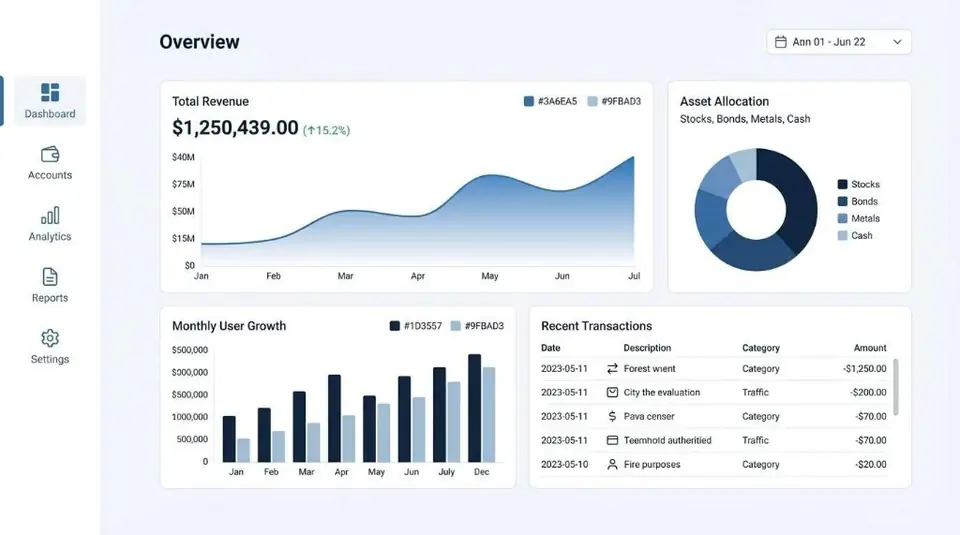
Financial analytics dashboards
Real-time reporting over high-volume transaction data, built for auditability and uptime.
- Next.js
- Python
- MongoDB
- Azure

CRM and customer platforms
Pipelines, account management, customer portals and support desks with automation and reporting built in.
- Next.js
- Node.js
- PostgreSQL
- AWS
Patient management platforms: common questions
Yes. We design patient management systems around the HIPAA Security Rule: encryption in transit and at rest, role-based access, audit logging, session controls, and a business associate agreement with the hosting provider. Compliance also depends on your policies and staff practices, so we document the controls we implement for your own assessment.
Usually, yes. Most modern EHRs expose HL7 FHIR or HL7 v2 interfaces, and we build an integration layer that exchanges patient demographics, appointments, encounters, and results with them. During discovery we confirm which interfaces your vendor supports and which direction each data flow needs to run.
No. Practices typically go live with scheduling and records first, then add the patient portal, telehealth, and integrations in later releases. Because the modules share one data model and identity, each addition builds on existing data rather than requiring a migration.
Have a similar system in mind?
Share your requirements and we will outline an architecture, a team and a timeline.